
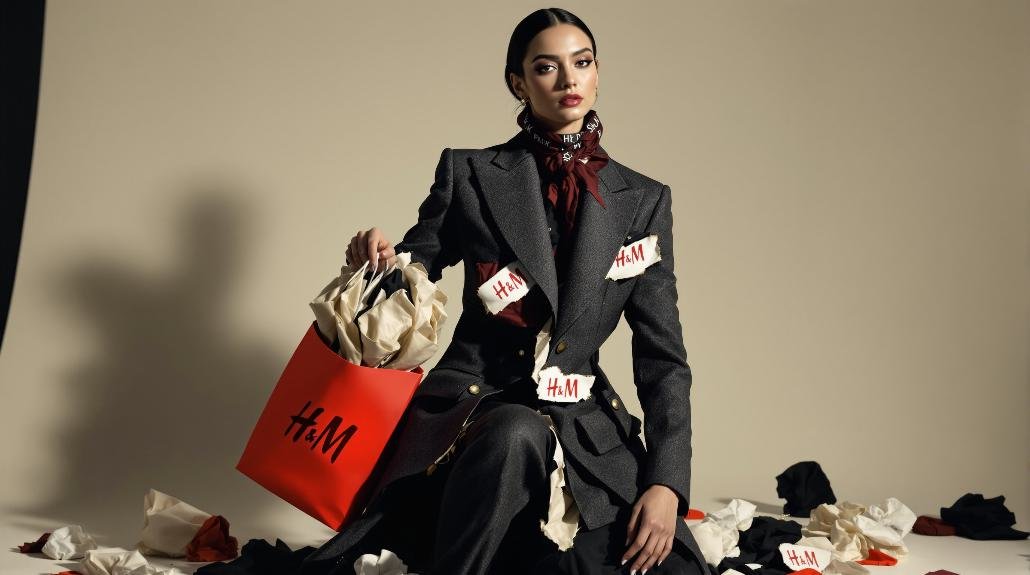
Designer collaborations have become fashion’s most seductive mirage. The premise glitters with democratic promise: haute couture aesthetics at high-street prices, luxury rendered accessible for the masses. Yet the reality tells a grimmer story.
H&M’s partnerships with Balmain, Versace, and Karl Lagerfeld generated queues around city blocks and crashed servers, but they also left shoppers empty-handed, stockrooms heavy with unsold pieces, and industry observers wondering whether these unions serve anyone beyond marketing departments.
The fundamental flaw runs deeper than logistics or pricing. These collaborations operate on a category error—the assumption that designer clothing functions like designer handbags, where the logo carries transferable value. Fashion, unlike accessories, demands context, construction, and that ineffable quality the French call allure. Strip away the atelier, the hand-finishing, the fabric that drapes like water over skin, and what remains resembles theatrical costume more than clothing.
For every Supreme x Louis Vuitton that genuinely pushed boundaries, there’s a Balmain x H&M drowning in overproduction or a Skims x Swarovski bewildering customers with $3,300 price points that satisfy neither luxury seekers nor accessible-fashion devotees. Understanding why collaborations fail offers more strategic value than cataloguing occasional successes.
The Consensus View: Why Everyone Believes Collaborations Work
The narrative crystallized in November 2004. Karl Lagerfeld’s collection for H&M triggered scenes resembling concert rushes more than shopping trips—queues snaking around Stockholm storefronts before dawn, websites buckling under digital stampedes, entire racks stripped bare within 90 minutes.
Industry orthodoxy insists these partnerships create universal benefit. Designers expand influence beyond traditional gatekeepers. Retailers acquire cultural credibility. Consumers finally access prestige at prices that won’t require installment plans. When Supreme and Louis Vuitton merged streetwear rebellion with heritage craftsmanship in 2017, the formula appeared validated at luxury’s most rarefied altitude—resale prices climbed to eight times retail within weeks.
The arithmetic seems flawless on first inspection. Combine complementary strengths, manufacture scarcity, generate media coverage that money alone can’t purchase. Fashion editors have repeated this calculus so frequently it carries the weight of economic law.
Yet the mythology emerged from a specific moment that can’t be replicated. Lagerfeld succeeded because novelty itself functioned as currency. Now, with partnerships arriving on quarterly schedules as predictable as earnings reports, that initial electricity has dissipated into routine. The surprise is gone—and so is the urgency.
What the Numbers Actually Reveal
The success stories have become fashion folklore while the failure rate tells a starkly different story—one executives would rather not discuss at investor meetings.
| Collaboration | Outcome | Financial Impact |
|---|---|---|
| Supreme x Louis Vuitton (2017) | Cultural phenomenon | $100M+ first week |
| Karl Lagerfeld x H&M (2004) | Template-setting success | Sold out in hours |
| Balmain x H&M (2015) | Overproduction disaster | 70% markdowns |
| Gap x Yeezy (2020-22) | Acrimonious dissolution | $2B+ losses |
| Adidas x Kanye West | Partnership collapse | $500M revenue loss (2023) |
| Skims x Swarovski | Price-point confusion | Critical dismissal |
The pattern emerges quickly. Successful partnerships share common architecture: cultural coexistence, values alignment, and a creativity-first approach that treats collaboration as artistic dialogue rather than marketing exercise. Supreme and Louis Vuitton worked because both brands understood controlled scarcity and cultivated desire—they spoke the same visual language, even if their price points occupied different galaxies.
The failures tell an equally instructive story. Gap x Yeezy, Bershka x League of Legends, Skims x Swarovski—each prioritized surface alignment over structural compatibility, assuming logo proximity could substitute for genuine creative conversation. These partnerships confused adjacency for affinity.
According to industry sources cited by Reuters, most collaborations collapse for predictable reasons: brands chase reflected prestige over genuine values alignment, treating partnerships as marketing exercises rather than creative ventures.
Why the Standard Narrative Fails
The consensus view fractures upon contact with reality. Consider what actually unfolds when these partnerships reach consumers.
The overproduction trap. Balmain x H&M showcased precisely what collapses when ambition outpaces execution—massive production flooded stores with pieces priced at $549 that felt more fast-fashion knockoff than luxury artifact. Within weeks, gold-button blazers sat on markdown racks at 70% off, their military detailing looking increasingly desperate.
The pricing paradox. When Skims affixed Swarovski crystals onto shapewear and demanded $3,300, the market responded with confused dismissal. The price alienated Skims’ core customer while failing to attract the crystal house’s traditional clientele. Charging €149 for a dress that photographs poorly next to the €3,000 original insults the intelligence of customers who made H&M profitable in the first place.
The brand mismatch. Bershka’s League of Legends collaboration managed the rare feat of alienating gamers who found it inauthentic while confusing regular customers who couldn’t parse the reference. Neither audience felt seen. Both felt exploited.
The deeper problem is philosophical. Luxury and disposability make uneasy bedfellows. When a designer whose atelier produces $12,000 gowns partners with a retailer selling $19.99 dresses, the contradiction requires addressing. Most collaborations ignore it entirely. The brand narratives clash; the craftsmanship claims ring hollow. Consumers—more sophisticated than marketers often credit—recognize inauthenticity and scroll past.
The Counterargument: Where Critics Miss the Point
The critique deserves a hearing. Detractors maintain that designer partnerships inevitably sacrifice craftsmanship for accessibility, manufacture artificial scarcity that rewards resellers over genuine customers, and dilute luxury positioning while delivering negligible value to average shoppers.
Where they have a point. The Balmain partnership priced items too high for fast-fashion faithful yet seemed suspiciously affordable to Balmain devotees, stranding the collection in commercial no-man’s-land. Gap hemorrhaged billions on Yeezy. Adidas absorbed a $500 million revenue blow. These weren’t anomalies—they were predictable consequences of flawed assumptions about how prestige transfers between brands.
Where they’re wrong. Dismissing the entire model means ignoring genuine triumphs that reshaped retail’s possibilities. The Lagerfeld partnership of 2004 democratized haute couture sensibilities without diminishing his standing or Chanel’s mystique—a feat once considered impossible. Supreme x Louis Vuitton obliterated the invisible wall between streetwear and high fashion, proving that a skateboard brand from Lafayette Street could share DNA with a 163-year-old French house without diluting either identity.
The model’s failures illuminate its requirements rather than its fundamental flaws. When these collaborations succeed—through authentic brand alignment, pricing that respects the host retailer’s audience, and supply management that balances demand without manufacturing hysteria—they expand creative territory in ways that serve both partners and, crucially, the customers caught between fast fashion and luxury’s velvet ropes.
What Should Change
The wreckage speaks volumes. The industry must abandon its addiction to quick cash grabs and build partnerships rooted in genuine creative exchange.
For the Industry
Fewer partnerships, deeper relationships. The scarcity model that once generated genuine cultural electricity has been replicated so systematically it now reads as formula. When every brand manufactures artificial urgency, none possesses actual rarity. Partner with emerging designers from Antwerp or Tokyo who bring genuine material innovation and something to prove—rather than established names coasting on decades-old reputation.
Production discipline. The Balmain overstock crisis illustrated how miscalculated demand projections destroy both profit margins and brand perception. Production runs must match realistic sales projections, not wishful thinking dressed as market research. Consider 20-40 pieces per store rather than warehouse-flooding volume.
Values alignment before contracts. Before signing, both parties should audit whether their cultural positioning can coexist authentically. Image-focused deals lacking this foundation inevitably collapse under consumer skepticism, leaving reputational damage that persists long after the collaboration ends.
For Consumers
Demand genuine value alignment—not aesthetic mashups dressed in premium pricing. When shapewear costs $3,300 because someone glued crystals to it, the appropriate response is bemused dismissal, not frenzied waitlist enrollment.
Apply the three-year test. Before purchasing any collaboration piece, ask: will this occupy wardrobe space in 36 months, or will it languish as a $400 monument to momentary enthusiasm? If the answer involves hesitation, the purchase answers itself.
Refuse manufactured urgency. Supreme built its empire on drops designed to bypass rational evaluation entirely. Yet participation in panic-buying remains optional. Recognizing the mechanism defuses it.
The Verdict
H&M’s collaboration strategy exposes a fundamental tension: the brand promises democratic access to high design while depending on the very exclusivity that makes such partnerships culturally potent. This contradiction can’t be engineered away—scarcity manufactured at scale is no scarcity at all.
Meaningful recovery demands radical recalibration. Fewer partnerships would restore genuine anticipation. Tighter production runs would create authentic scarcity rather than its theatrical imitation. Price points need reconsideration; the gap between retail collaboration and designer original shouldn’t feel insulting.
Most critically, brands should prioritize creative ambition over celebrity wattage. The collaborations that genuinely resonate—Uniqlo’s permanent Christophe Lemaire line, Target’s Missoni anniversary collection that crashed servers through authentic demand—treated partnership as conversation rather than transaction.
The formula isn’t complicated. It’s just rarely followed.
Stop chasing trends that evaporate before receipts clear. Start cultivating legacy through partnerships that respect the craft, acknowledge the audience’s sophistication, and build something worth remembering beyond the initial press release. Consumer spending patterns function as fashion’s most reliable compass. Vote with purchases for creativity and craftsmanship over borrowed cachet.
The collaborations that follow will reflect whatever values the market rewards.
Frequently Asked Questions
Why do most designer collaborations fail?
Three consistent patterns emerge: overproduction that floods markets and forces markdowns, pricing that satisfies neither the fast-fashion customer nor the luxury devotee, and brand mismatches where partners share no genuine creative or cultural connection. The Balmain x H&M partnership exhibited all three—$549 blazers that lingered on racks, eventually marked down 70%, alienating both audiences the collection supposedly targeted.
Which collaborations have actually succeeded?
Supreme x Louis Vuitton (2017) and Karl Lagerfeld x H&M (2004) represent the gold standard. Both succeeded through cultural alignment, controlled scarcity, and creative authenticity that felt inevitable rather than forced. Loewe’s Studio Ghibli partnership and Uniqlo’s permanent Christophe Lemaire line demonstrate that success requires treating collaboration as ongoing conversation, not one-time transaction.
How should consumers evaluate collaboration purchases?
Apply the three-year test: will this piece remain in rotation, or become a closet monument to momentary hype? Calculate cost-per-wear rather than fixating on “limited edition” urgency. Examine construction quality—collaboration pieces often sacrifice craftsmanship for speed-to-market. If the garment exists primarily for an unboxing video, it has failed its fundamental purpose.
What should H&M change about its collaboration strategy?
Fewer partnerships with deeper creative relationships. Tighter production runs (20-40 pieces per store rather than warehouse-flooding volume). Price points that respect rather than insult the core customer. Most importantly: partner with emerging designers who bring genuine innovation rather than established names trading on fading reputation.

Lina, Founder, Creative Director & Editor-in-Chief
The mind behind Arahkaii. Lina launched the platform to spotlight the designers and brands she kept discovering and thinking “why isn’t anyone talking about this?” She brings a thoughtful, intentional approach to storytelling. She leads the editorial team with a focus on clarity, creative depth, and modern femininity, shaping narratives that feel both elevated and deeply human.She shapes everything from content strategy to editorial tone, is hands-on with every feature, and believes the best content makes you stop scrolling. Currently juggling platform-building, brand outreach, and defending her slow morning ritual as essential creative practice.

