
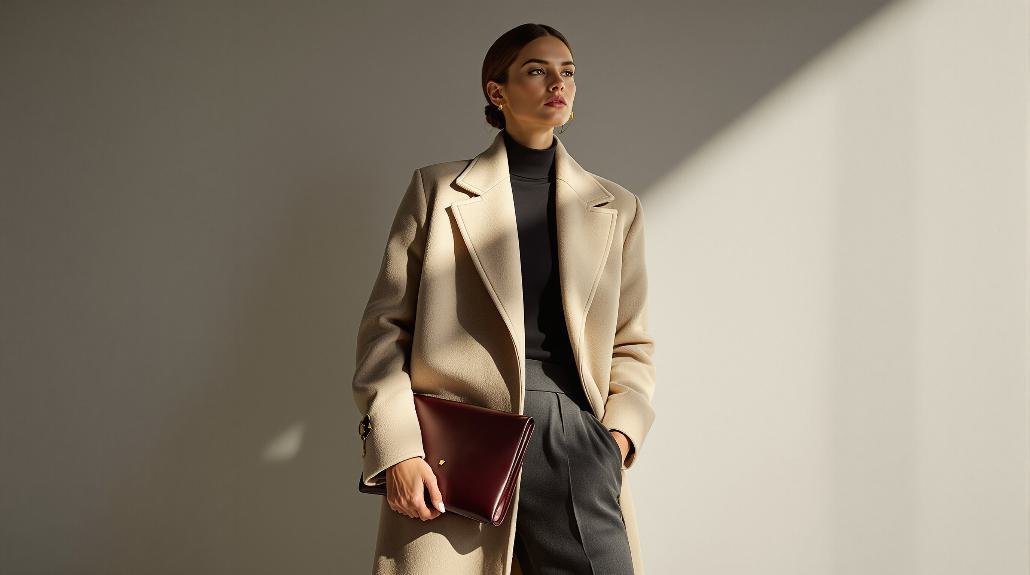
Quiet luxury has become fashion’s most debated movement—and its contradictions run deeper than most realize. Why Stealth Wealth Is Reshaping Fashion—And Where the Narrative Falls Short
Logo-free Bottega Veneta clutches surged 31% in 2024 while Hermès bags bearing visible insignia dropped 23%—a reversal that reveals something far more profound than seasonal preference. This is fashion’s power structure inverting itself.
The houses wagering their futures on this shift understand what traditional luxury empires are racing to comprehend. The Row, Loro Piana, and Brunello Cucinelli have built businesses on a counterintuitive premise: today’s wealthy prefer their status unreadable to outsiders. Like the difference between a Caravaggio in a private collection and a reproduction hung for guests to admire, true luxury has retreated behind closed doors—visible only to those who already know what they’re looking at.
Yet the consensus narrative—all that talk of timeless minimalism and refined restraint—crumbles under scrutiny. The data tells a messier story, one where authentic craft movement and cynical marketing opportunity coexist in uncomfortable tension. This analysis examines what the quiet luxury phenomenon actually represents, where the standard view fails, and what discerning consumers should understand before investing.
The Consensus View: What Everyone Believes
The gospel of quiet luxury has been preached with near-religious fervor since 2023. You know the doctrine: investment pieces over passing fads, wealth that whispers rather than shouts, logo-free neutrals that mark the truly refined.
According to McKinsey’s 2024 State of Fashion Report, 76% of luxury consumers now prioritize material quality over visible branding—a figure that would have seemed improbable a decade ago. The same research indicates 57% of consumers recognize the quiet luxury concept by name, remarkable awareness for terminology that barely existed in mainstream conversation three years prior.
This orthodoxy emerged from post-pandemic exhaustion with conspicuous consumption. Cultural narratives accelerated the change, with Succession‘s wardrobe of anonymous cashmere becoming a masterclass in what money whispers rather than shouts. The Roy family dressed in Loro Piana baseball caps and Brunello Cucinelli knits that cost more than most monthly rents yet bore no visible insignia—transforming ultra-wealthy wardrobes into aspirational templates for mass audiences.
The movement crystallized around brands positioned as redemption from both logo mania and fast fashion’s environmental transgressions. Sustainability claims now carry weight: Bain & Company’s 2024 Luxury Study found 65% of luxury buyers factor environmental credentials into purchasing decisions, demanding radical transparency in sourcing and production.
The narrative is seductive in its simplicity. Restraint equals sophistication. Quality over quantity. Whisper over shout. Yet this consensus deserves scrutiny—the story flatters its adherents while obscuring more complicated truths about who benefits, who’s excluded, and what desires actually drive purchasing decisions.
Where This View Comes From
Cultural gatekeepers manufactured this movement from genuine exhaustion and calculated opportunism. Fashion editors, luxury executives, and heritage house strategists recognized a moment—consumers fatigued by logomania’s visual assault were hungry for something that felt more refined.
Succession arrived in 2018 like a style manifesto. The show didn’t just reflect how the ultra-wealthy actually dress; it transformed their wardrobes into aspirational templates. Costume designer Michelle Matland sourced pieces from Loro Piana, Brunello Cucinelli, and J. Crew for characters whose net worth exceeded small nations—proving that true money needs no announcement.
Brands responded with surgical precision. Bottega Veneta under Daniel Lee positioned its woven leather and logo-free designs as sophisticated alternatives to the screaming maximalism of the previous decade. The strategy worked spectacularly—Business of Fashion reported that American labels’ quiet luxury branding requests surged 60% year-over-year after 2020, as influencers pivoted from ostentatious displays toward “investment pieces” that signaled taste rather than transaction.
The Row exemplifies this paradox most clearly. Mary-Kate and Ashley Olsen built an empire on the premise that the most expensive garment in the room should be the hardest to recognize. Their $4,000 coats became status symbols precisely because they demanded insider knowledge to identify—cultural capital replacing visible branding as the currency of distinction. This transformation of restraint into its own form of conspicuous performance reveals the machinery behind the movement’s seemingly effortless rise.
What the Numbers Actually Reveal
The narrative you’ve been fed about quiet luxury crumbles under scrutiny. The data reveals something far messier, and far more profitable for those paying attention.
| Metric | Data Point | Source |
|---|---|---|
| Consumer quality prioritization | 76% cite materials as primary driver | McKinsey 2024 |
| Market size projection | $283 billion by end of 2025 | Bain & Company |
| Sustainability consideration | 65% factor environmental credentials | Bain Luxury Study 2024 |
| Logo-free sales share | 60% at heritage houses | Industry interviews |
| Maximalist market share (projected 2026) | 30% | WGSN Trend Forecasting |
| Eco-minimalist share (projected 2026) | 20% | WGSN Trend Forecasting |
The tension becomes clear immediately. If 30% of the market pivots toward maximalism by 2026 while eco-minimalism captures only 20%, quiet luxury’s dominance faces structural challenge. Women’s double-breasted wool coat sales—that supposed wardrobe cornerstone—collapsed 49% between December 2024 and April 2025, according to Edited retail analytics. This isn’t gradual evolution. It’s market volatility masquerading as philosophical shift.
Regional variations complicate the picture further. Euromonitor’s 2024 analysis shows India’s luxury consumers driving 84% spending increases through status signaling—a behavior fundamentally incompatible with logo-free discretion. The quiet luxury playbook assumes a shared vocabulary of subtle cues, yet markets built on visible aspiration can’t whisper; they need to announce.
What industry insiders understand—and what most trend forecasters conveniently omit—is that “quiet luxury” has already splintered. The movement magazines still present as monolithic has fractured into competing aesthetics, divergent price tiers, and regional appetites that vary wildly from Milan to Mumbai to Manhattan.
Why the Standard Narrative Fails
The logic fractures upon examination. How does an aesthetic defined by restraint and permanence generate a 60% year-over-year spike in branding requests, only to fragment into warring camps? The movement that promised coherence now suffers from philosophical whiplash.
The Contradiction at Its Core
December 2024’s peak wool coat sales cratered by April 2025—a trajectory that mirrors fast fashion’s boom-bust metabolism, not the measured pace of genuine heritage. What brands position as eternal behaves like the seasonal churn it claims to reject. The disconnect is structural, not incidental.
Sustainability claims fracture similarly. When two-thirds of consumers cite environmental responsibility as a purchasing priority, brands rush to claim the mantle. But quiet luxury can’t champion permanence while splintering into trend-chasing subcategories every eighteen months. The math refuses to reconcile. Either the aesthetic represents genuine philosophy—buy less, buy better, keep forever—or it functions as another marketing veneer stretched over the same accelerated consumption cycle.
Real-World Consequences
The fractures produce measurable damage across wardrobes, bank accounts, and expectations. Houses like Chanel and Hermès continue raising prices under the banner of craftsmanship—Chanel increased prices approximately 60% since 2019, according to Reuters tracking—even as consumers increasingly demand transparency.
The result leaves buyers trapped in an uncomfortable middle ground. Heritage brands extract ever-higher premiums while fast-fashion operators flood social media with $40 polyester blazers marketed as understated elegance. Neither option delivers genuine value. Customers overpay for trend-cycle casualties dressed up as investment pieces, their wardrobes filling with garments that promise permanence but deliver planned obsolescence wrapped in cashmere.
The ethical dimension proves equally troubled. Those consumers prioritizing sustainable practices discover that many ateliers can’t substantiate their responsibility claims at scale, while brand repairability programs often function as marketing theater rather than meaningful service.
The Counterargument: What Critics Get Right and Wrong
Critics dismiss quiet luxury as little more than a marketing rebrand—”expensive basics” dressed in aspirational language to justify four-figure price tags on unadorned cashmere. The skepticism carries weight.
Where They Have a Point
The exclusivity problem cuts deep. When Loro Piana sweaters start at $2,400 and The Row’s minimalist trousers command $1,290, the phrase “accessible elegance” collapses into contradiction—a linguistic sleight of hand that promises democratic beauty while gatekeeping its delivery. The movement risks becoming yet another aspirational mirage for middle-income shoppers who stretch budgets chasing standards that remain perpetually out of reach.
The homogeneity critique also holds weight. Scroll through enough beige-on-beige Instagram grids and the aesthetic monotony becomes numbing—a visual equivalent of muzak in an upscale hotel lobby. When every feed looks photographed in the same Antwerp apartment, individuality suffocates under a cashmere blanket of sameness.
Price transparency remains murky despite increased scrutiny, and consumers deserve better than vague gestures toward “heritage techniques” when asking why a cotton shirt costs $450. These contradictions matter, and addressing them honestly strengthens rather than weakens the conversation.
Where They’re Wrong
Wholesale dismissal, however, rests on flawed premises—starting with the assumption that high price points automatically invalidate cultural worth. Critics conflate cost with exclusion, yet mature shoppers prioritizing craftsmanship over logos suggests a democratizing shift toward skill appreciation rather than pure status signaling. This distinction matters: admiring a hand-stitched seam shares more DNA with appreciating a Brancusi sculpture than with flaunting a monogrammed handbag.
The claim that minimalism equals elitism similarly overlooks sustainability’s genuine influence. When a cashmere coat lasts fifteen years instead of fifteen months, its per-wear cost drops below that of disposable alternatives. The math favors intention over impulse.
Dismissing quiet luxury as “boring” also misreads its current evolution. FW25’s textured materials—bouclé, brushed wool, pebbled leather—prove the aesthetic adapts without sacrificing restraint. Brown hues have surged 55% year-over-year according to WGSN color tracking, channeling the warm earthiness of Terrence Malick cinematography rather than sterile museum white.
Quality doesn’t require apology. It requires context—and critics willing to look beyond the price tag toward the philosophy it represents.
What Should Change
The quiet luxury movement has reshaped how fashion operates. Now comes the harder work: ensuring it outlasts the trend cycle that birthed it.
For the Industry
Transparency has become non-negotiable. Price adjustments throughout 2024 left consumers more skeptical, now demanding clarity on both costs and craftsmanship origins. Smart brands will respond by investing in storytelling that illuminates the atelier, celebrates repairability programs, and traces material provenance with the precision of a museum catalog. Vague appeals to elegance no longer suffice.
The saturation numbers reveal vulnerability. The surge in branding requests suggests the market approaches a tipping point where differentiation becomes existential. Heritage must be genuine. Narratives must be earned. The brands that survive this winnowing will be those whose stories withstand scrutiny—not those who adopted visual grammar without learning the language beneath it.
Regional intelligence matters more than global uniformity. India’s spending increase demands different approaches than mature European markets where consumers have moved beyond novelty, expecting engagement that acknowledges their sophistication rather than courting their conversion.
For Consumers
The quiet luxury movement promised discernment. Too many shoppers mistook the aesthetic for the ethos, collecting logo-free cashmere like participation trophies rather than interrogating what those pieces actually represent.
Shift from accumulation to intention, asking not “Is this quiet luxury?” but “Will I reach for this in 2030?” That temporal test cuts through marketing noise with surgical precision. Prioritize repairability over replaceability, choosing brands that publish atelier content and offer lifetime services—when a house invests in maintaining your garment for decades, they’re signaling confidence in their own craftsmanship.
Demand price transparency. Treat fashion decisions with the same rigor applied to art acquisition. The information exists; the question is whether you’ll seek it.
Embrace sustainability beyond marketing copy. The contradiction remains stark: most consumers claim environmental values matter, yet fast-fashion minimalism—those €30 “quiet luxury dupes”—continues thriving. Buy half as much. Spend twice as thoughtfully. Recognize that genuine stealth wealth, the kind requiring no Instagram validation, isn’t about appearing wealthy—it’s about possessing objects worthy of the life you’re building around them.
Key Takeaways
The quality shift is real but complicated. Three-quarters of consumers prioritize materials over logos, yet market fragmentation suggests this preference coexists with competing desires rather than replacing them entirely.
Price increases without transparency erode trust. Chanel’s significant hikes since 2019 test customer loyalty; brands that justify premiums with substance will outlast those trading on mystique alone.
Regional markets operate by different rules. What whispers in Milan must announce in Mumbai; global quiet luxury strategies fail without local intelligence.
The sustainability test separates authentic commitment from marketing veneer. If your “investment piece” follows seasonal release cycles, the philosophy has already been compromised.
Quiet Luxury: Frequently Asked Questions
Which Affordable Brands Offer Authentic Quiet Luxury Under $500?
COS, Massimo Dutti, and Everlane have mastered understated elegance beneath the $500 threshold. COS channels architectural precision with Italian wool coats and structured blazers referencing Bauhaus minimalism. Massimo Dutti excels in tactile pleasure—buttery leather goods and cashmere knits rewarding touch over visibility. Everlane built its reputation on radical pricing transparency, offering Japanese denim and organic cotton basics. What unites these brands: construction over logos, fabric weight over flashy hardware.
How Do You Care for Quiet Luxury Garments?
Treat pieces like you would a first-edition book. Wooden hangers preserve coat shoulders the way proper framing protects art. Cedar sachets guard cashmere against moths; professional dry cleaning, used sparingly, treats wool with deserved respect. Keep leather away from direct light, condition twice yearly, and rotate pieces to prevent wear patterns. Hand-wash silk and cashmere in cold water, dry flat. Most importantly, embrace the tailor and cobbler—artisans whose work honors original craftsmanship. A reheeled boot carries more character than anything fresh from a shop floor.
Can Quiet Luxury Work on Entry-Level Budgets?
The ethos requires no trust fund—only intention. Begin with wardrobe bones: a wool coat that drapes like architecture, trousers cut with precision, leather goods aging like good wine. Calculate cost-per-wear rather than sticker shock; one excellent blazer worn 200 times costs less per outing than five fast-fashion pieces destined for landfill. Vintage shopping in affluent neighborhoods yields cashmere predating planned obsolescence. Neutral palettes compound value, each piece multiplying styling possibilities. But fit matters more than fabric origin—a £15 alteration transforms a thrift find into something reading as bespoke.
What Are the Best Second-Hand Sources for Quiet Luxury?
Authenticated platforms like Vestiaire Collective and The RealReal have transformed how discerning buyers acquire Loro Piana cashmere and Bottega Veneta leather. Rebag focuses on heritage handbags with rare-book-dealer precision. Physical consignment shops in affluent Manhattan, London, and Paris neighborhoods harbor remarkable finds priced 30-40% below retail. Key insight: craftsmanship holds value while visible branding depreciates—a discreet 2019 cashmere coat commands stronger resale than last season’s logo-splashed item.
How Do You Style Quiet Luxury for Different Body Types?
The philosophy mirrors what Mies van der Rohe understood about architecture: form follows function, and function means honoring what you’re working with. For curvier frames, structured pieces establish clean vertical lines while quality fabrics drape rather than strain. Petite builds benefit from tonal monochromatics—unbroken color columns tricking the eye upward. Taller silhouettes possess the advantage of layering textures without visual chaos. The Row’s minimalist cuts succeed precisely because they treat the body as gallery space—neutral, respectful, never fighting for attention against the work itself.
The Verdict
Quiet luxury faces its most honest reckoning not in trend forecasts but at the cash register—where aspiration collides with four-figure commitment. The calculus is binary: you’re building a decade-long wardrobe or you’re not.
Those prioritizing material quality over brand recognition aren’t browsing; they’re running cost-per-wear calculations, treating clothing acquisition with the analytical rigor one might apply to art collection. Yet the anticipated maximalist resurgence suggests something more nuanced than simple trend fatigue—quiet luxury is fracturing into highly personal interpretations of restraint, each collector defining discretion through their own cultural lens.
Consider how dramatically context shapes expression. A Mumbai collector and a Milan architect may share identical values around quality and longevity while assembling wardrobes that look nothing alike. The principle translates; the execution varies.
The verdict crystallizes with unusual clarity: quiet luxury survives 2025 not as trend but as value system—one demanding both financial resources and philosophical alignment with permanence over novelty. Like modernist architecture or slow food movements before it, this approach to dressing requires commitment transcending seasonal enthusiasm.
Those who adopt it aren’t following fashion. They’re opting out of its endless churn entirely.
Related Reading
- Why Quiet Luxury Is Fashion’s Biggest Contradiction
- 12 Quiet Luxury Brands Wealthy Insiders Actually Wear
- Why Designer Collaborations Keep Failing

Lina, Founder, Creative Director & Editor-in-Chief
The mind behind Arahkaii. Lina launched the platform to spotlight the designers and brands she kept discovering and thinking “why isn’t anyone talking about this?” She brings a thoughtful, intentional approach to storytelling. She leads the editorial team with a focus on clarity, creative depth, and modern femininity, shaping narratives that feel both elevated and deeply human.She shapes everything from content strategy to editorial tone, is hands-on with every feature, and believes the best content makes you stop scrolling. Currently juggling platform-building, brand outreach, and defending her slow morning ritual as essential creative practice.