
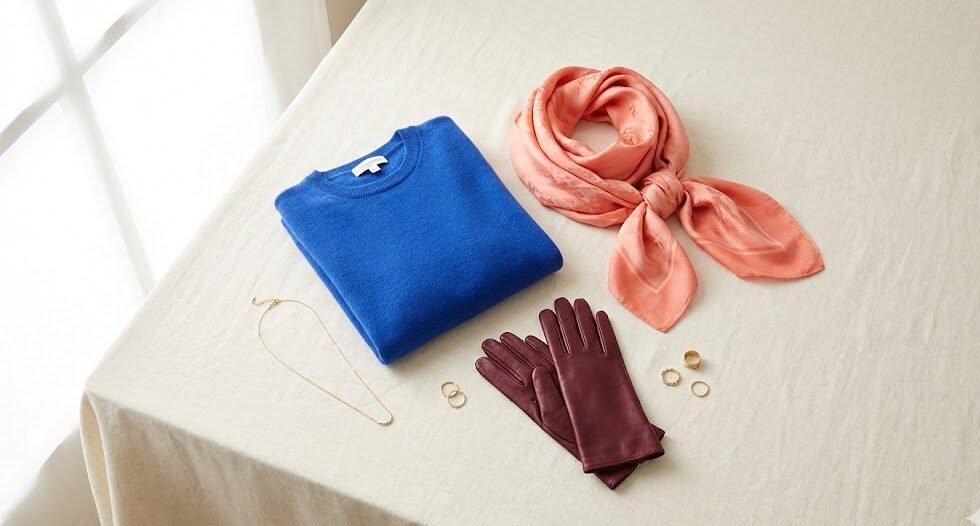
Dopamine dressing is more than a TikTok trend—it’s a neuroscience-backed approach to using colour as a tool for emotional wellbeing. Can the colours you wear genuinely shift your mood? The answer lies at the intersection of ancient wisdom, modern neuroscience, and the Spring 2026 runways.
Four thousand years ago, ancient Egyptians built temples bathed in coloured light. Sunlight filtered through gemstones—ruby, sapphire, emerald—casting healing hues across patients seeking restoration. They believed colour possessed the power to cure. Pythagoras, five centuries before Christ, prescribed specific shades to treat ailments of body and spirit.
Fast forward to Milan Fashion Week, September 2025. At Prada, the runway floor gleamed a traffic-cone tangerine, reflecting off garments in searing yellows, mint greens, and unexpected pinks. At Loewe, models layered colour-blocked windbreakers in clashing tones, polo shirts stacked beneath contrasting V-necks. The message was unmistakable: after seasons of whispered neutrals and stealth wealth, fashion had rediscovered volume—a shift that echoes the bold aesthetic choices we’ve seen emerging at Jakarta Fashion Week 2025 and beyond.
Between those ancient temples and these modern runways lies a concept that has captured the contemporary imagination: dopamine dressing. The practice of intentionally wearing colours and styles that spark joy has evolved from pandemic-era coping mechanism to legitimate wellness philosophy—one backed by genuine research, even as its limitations deserve honest examination.
What Is Dopamine Dressing, Really?
The term emerged in 2020, coined by Dr. Dawnn Karen, a fashion psychologist whom The Times dubbed “The World’s First Fashion Psychologist” and The New York Times christened “The Dress Doctor.” Karen, the first Black psychology professor at the Fashion Institute of Technology, developed the concept while observing her community during COVID lockdowns. She noticed individuals in recovery struggling without their usual support structures and began exploring fashion as what she calls a “healing modality.”
Dopamine dressing—or mood enhancement dressing, as Karen prefers academically—is the intentional selection of clothing based on the emotional response it triggers. The name references dopamine, the neurotransmitter associated with pleasure, motivation, and reward. While your chartreuse blazer cannot literally inject dopamine into your bloodstream, the emotional response it generates can stimulate neurochemical changes that elevate mood.
“Mood Enhancement Dressing isn’t simply dressing fancy when you’re obligated to,” Karen explains in her book Dress Your Best Life. “It’s using clothes to shift your perspective as needed. A great example would be wearing happy colours to help offset seasonal depression—to literally brighten your outlook.”
The crucial nuance often lost in trend coverage: dopamine dressing is profoundly personal. The colour that lifts your spirits may differ entirely from your neighbour’s. Universal prescriptions miss the point. What matters is your associations, your memories, your emotional vocabulary of colour and texture.
The Science Behind the Wardrobe
The psychological foundation for dopamine dressing rests on a concept called enclothed cognition, a term coined by researchers Hajo Adam and Adam Galinsky in a landmark 2012 study published in the Journal of Experimental Social Psychology.
Their experiments involved white lab coats. Participants who wore a coat described as a “doctor’s coat” demonstrated significantly improved performance on attention-based tasks compared to those who wore the identical garment labelled a “painter’s coat”—or those who simply looked at the coat without wearing it. The researchers concluded that clothing influences psychological processes through two simultaneous factors: the symbolic meaning we attach to garments and the physical experience of wearing them.
The implications extend far beyond lab coats. When you slip into a blazer that makes you feel commanding, you may actually become more commanding. The silk blouse that evokes confidence might genuinely make you more confident. The mechanism operates through association: clothing functions as a kind of cognitive shorthand, activating mental frameworks that shape behaviour.
Professor Karen Pine at the University of Hertfordshire explored this territory in her research on clothing and mood. Her findings suggested that when participants wore clothes of symbolic value to them, their perceived confidence increased measurably. “The attributes we associate with specific clothes are incredibly powerful,” Pine noted. “When we wear these clothes, the associations have the power to change the way we feel and even change the way we act.”
A 2023 meta-analysis published in PubMed examined 40 studies involving nearly 4,000 participants and confirmed that enclothed cognition produces small to moderate effects on thoughts, feelings, and behaviours. Studies published after 2015 showed particularly strong replicability, suggesting the phenomenon is genuine—if more subtle than some enthusiasts claim.
The Colour Spectrum: What Research Actually Shows
Colour psychology offers another lens for understanding how what we wear might influence how we feel. Research from the University of British Columbia found that blue tones tend to produce calming effects, reducing stress and promoting a sense of security. Separate studies linked red to increased energy, confidence, and even improved physical performance.
A 2014 study in Colour Research & Application reported that participants wearing bright colours—yellow, orange, pink—felt more optimistic and confident throughout their day. Earlier research from 1994 established that light colours generally associate with positive emotions while darker shades correlate with negative ones, though individual variation is substantial.
Yet colour psychology resists simple codification. In China, red symbolises luck and celebration; in India, it represents purity and is the traditional colour for brides. White signals mourning in parts of Asia while representing new beginnings in Western wedding traditions. These cultural layers mean that universal colour prescriptions often prove meaningless—a reality well understood in Southeast Asian fashion, where designers increasingly honour these regional nuances.
The more sophisticated approach treats colour as a personal vocabulary. Your relationship with emerald green—perhaps it evokes a beloved grandmother’s ring, or a garden where you found peace—matters more than any generalised claim about what green “does.” The practice of colour journaling, tracking emotional responses to different hues over time, can reveal patterns unique to your psychology.
Spring 2026: Fashion Rediscovers Feeling
After seasons dominated by quiet luxury—those whispered camel coats, those logo-free accessories, that determined neutrality—the Spring 2026 runways announced a decisive shift. Fashion had grown weary of its own restraint.
At Paris Fashion Week, primary colours returned with force. “Poster paint tones and colouring pencil hues were layered, blended and combined,” observed coverage of the shows, “to offer fun, dopamine-dressing options for those looking to get their summer wardrobes looking on the bright side.” The aesthetic marked dopamine dressing 2.0—less pandemic coping mechanism, more deliberate philosophy of joy.
Chartreuse emerged as the colour of the season, appearing at shows from Tibi to Burberry to Saint Laurent. Cobalt blue in that particular Yves Klein intensity surfaced at Luar, Valentino, Celine, and Loewe. At Versace, single looks combined lilac, cherry red, and cobalt in unexpected harmony. The prevailing message: colour need not be harmonious to be beautiful. Clashing can spark as much joy as coordinating.
Celebrity adoption accelerated the conversation. The Princess of Wales appeared in a vivid purple Emilia Wickstead suit at London’s Design Museum, a deliberate departure from traditional winter palettes. Eva Longoria walked Cannes in yellow sequins that radiated warmth from every photograph. Harry Styles and Zendaya continued championing bold colour as personal signature rather than seasonal trend.
The runway shift reflects broader cultural exhaustion with minimalist restraint. As one trend forecaster observed, the era of “sad beige” has finally yielded to “a renewed appetite for opulence and decorative design.” The pendulum swings not toward maximalism for its own sake, but toward permission—permission to dress for feeling rather than for invisibility.
The Honest Limits
Intellectual honesty requires acknowledging what dopamine dressing cannot do. It is not a treatment for clinical depression, anxiety, or other mental health conditions. No amount of yellow can substitute for therapy, medication, or professional care when such interventions are needed.
“Dopamine dressing can be a great way to boost your mental health and mood,” notes one clinical perspective, “but it is not the answer to severe mental disorders.” The practice belongs in the category of wellness tools alongside exercise, journaling, and adequate sleep—supportive rather than curative, helpful rather than sufficient. This aligns with what we might call the conscious luxury manifesto: the understanding that truly elevated living involves intentionality across all domains, not quick fixes.
Other limitations merit consideration. Body image pressures may make fashion experiments stressful rather than liberating for some individuals. Workplace cultures vary in their tolerance for bold expression; a neon suit that sparks your joy might create professional complications. And the sustainability critique deserves acknowledgment: dopamine dressing need not mean constant consumption. Shopping your existing closet for overlooked sources of joy respects both wallet and planet—an ethos that resonates with the regenerative fashion movement emerging across Southeast Asia.
The science, too, warrants modesty. No formal clinical studies have specifically examined dopamine dressing as a defined practice. The supporting research on enclothed cognition and colour psychology provides a plausible mechanism but stops short of definitive proof. We are working with strong suggestions rather than settled science.
How to Actually Practice It
Understanding the theory matters less than developing your own approach. Begin by noticing. Over the coming weeks, pay attention to how different garments make you feel. Which items do you reach for on difficult mornings? Which colours appear when you feel most yourself?
Consider keeping a brief colour journal. Note what you wore and how you felt—not necessarily causation, but correlation worth examining. Patterns may emerge. Perhaps you discover that wearing green consistently accompanies productive days, or that a particular texture grounds you during anxious periods.
Build a personal palette based on your discoveries rather than external prescriptions. Your dopamine colours are the ones that resonate with your history, your associations, your aesthetic sensibility. If black genuinely makes you feel powerful and present, it qualifies as dopamine dressing regardless of its darkness. The practice concerns intention, not hue.
Start modest if bold colour feels foreign. A single bright accessory—scarf, bag, earrings—can introduce colour without overwhelming your comfort zone. Many practitioners describe a gradual expansion of colour confidence, each successful experiment enabling the next. For those navigating tropical climates, consider how your colour choices interact with humidity-resistant makeup strategies to create a cohesive mood-boosting routine.
Finally, resist pressure to perform happiness through clothing. The goal is authentic self-expression, not costumery. Dopamine dressing means dressing in ways that genuinely serve your wellbeing, which on some days might mean soft neutrals and comfort textures. Authenticity trumps trend compliance.
Beyond the Closet
The dopamine philosophy has expanded beyond fashion. Interior design now speaks of “dopamine decor”—the intentional use of bold colour, layered pattern, and maximalist styling to create mood-enhancing spaces. After years of neutral interiors that “whispered rather than shouted,” designers report growing client demand for joy-forward environments.
“More people now have the language to talk about design in relation to their feelings,” observes one interior designer. “Clients come to me and say they want their homes to feel happy, or calm, or joyful.” The 2026 colour palette for homes emphasises “joy injection”—saffron yellows, terracotta warmth, emerald richness. This shift particularly resonates with Southeast Asian digital nomads crafting intentional living spaces in their adopted cities.
Beauty has followed suit, with “dopamine makeup” encouraging bold lip colours and unexpected eyeshadow choices. The underlying premise remains consistent: intentional aesthetic choices can influence emotional states. Whether that influence operates through neuroscience or simple pleasure—or some combination—matters less than the lived experience of feeling better.
The Deeper Truth
Perhaps the most valuable aspect of dopamine dressing lies not in any specific colour or garment but in the practice of intentionality itself. In a world of algorithmic recommendations and trend cycles that move faster than seasons, deliberately choosing what to wear based on how you want to feel represents a small but genuine act of agency.
The ancient Egyptians may not have understood neurotransmitters, but they understood something essential: what we surround ourselves with shapes our experience. Colour, texture, form—these are not trivial concerns. They constitute the visual environment we inhabit most intimately, the one that moves with us through every moment of our day.
Dr. Dawnn Karen’s contribution was giving this intuition a name and a framework. The Spring 2026 runways gave it cultural permission. The research gives it intellectual credibility. But the practice itself belongs to anyone willing to pay attention to the relationship between what they wear and how they feel.
Your closet is not a pharmacy. But it might be something equally valuable: a tool for intentional living, a daily opportunity to choose joy—or calm, or confidence, or whatever quality you most need. The science suggests this choice carries real weight. The experience of countless practitioners confirms it. The only remaining question is which colours speak your language.
What colours make you feel most yourself? The answer is more personal—and more powerful—than any trend report can prescribe.

Natalia Amir
Feature Writer, Fashion & Lifestyle
With a passport as storied as her byline, Natalia Amir brings a global lens to luxury fashion and contemporary living. Having contributed to international brands across continents, she possesses that rare ability to translate the pulse of global style into narratives that resonate deeply with Asia’s discerning audience. Her writing is informed by years immersed in the luxury market—understanding not just what’s covetable, but why it matters. At Arahkaii, she leads our fashion and lifestyle coverage with intelligence, elegance, and an eye for the extraordinary in the everyday.