
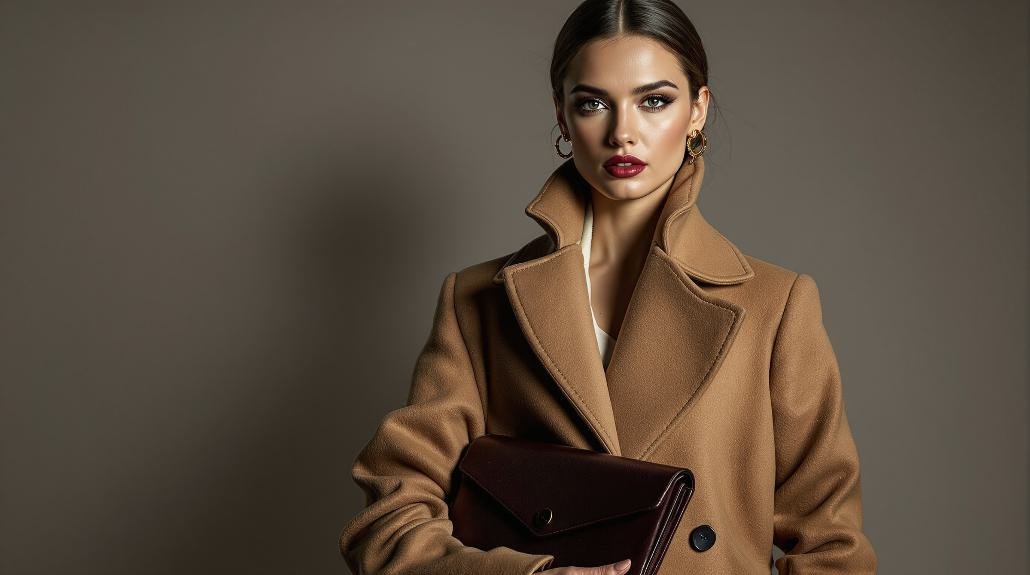
These quiet luxury brands define stealth wealth in 2026, offering the kind of understated elegance that old money has always understood. The uniform of serious wealth has undergone a quiet revolution. Billionaires no longer broadcast status through logos and monograms—that visual vocabulary now belongs to aspirational consumers chasing recognition rather than refinement.
The genuinely affluent have adopted a different semiotic system entirely. They wear labels you wouldn’t identify from three metres away, garments priced at $3,000 that possess the unassuming elegance of a well-made basic. Think of it as the sartorial equivalent of a Cy Twombly canvas: seemingly simple, yet requiring substantial knowledge to decode its true value.
This shift functions as a filtering mechanism, separating those who understand from those who merely spend. HBO’s Succession brought this aesthetic to mainstream attention, but the wealthy have dressed this way for generations. Here are the 12 houses that define the category.
How We Chose the Best Quiet Luxury Brands
Three criteria guided selection: heritage craftsmanship verified through supply chain transparency, consistent presence in high-net-worth wardrobes (confirmed through private client advisors and personal shoppers), and price-to-quality ratios that justify investment over decades rather than seasons.
We excluded brands that have diluted through outlet expansion or excessive licensing. Each house listed maintains production standards that would satisfy a discerning collector—the kind of person who asks which Mongolian province sourced the cashmere before examining the hand of the fabric.
1. Loro Piana
The gold standard. This LVMH-owned Italian house has built its reputation on cashmere so fine it measures in microns, sourced from Inner Mongolian goats and Peruvian vicuñas. According to Business of Fashion, Loro Piana’s revenue grew 18% year-over-year in 2024, with waitlists stretching six to eight months for signature pieces.
Entry point: $800 cashmere sweater | Investment piece: $6,500 Storm System coat
The brand’s appeal lies in what it refuses to do—shout. No visible logos appear on exteriors. The texture tells the story; the construction proves the investment.
2. Brunello Cucinelli
The philosopher-king of Italian fashion operates from the medieval hilltop village of Solomeo, where artisans earn above-market wages and work regulated hours. Cucinelli has built a €1.1 billion empire on “humanistic capitalism” and cashmere that costs more than most people’s rent.
Entry point: $1,200 cotton basics | Investment piece: $4,500 cashmere suit
Revenue climbed 14.3% in 2024, proving that ethics and profit can coexist when execution remains flawless. The brand particularly excels at men’s tailoring—soft-shouldered jackets that look equally appropriate in boardrooms and Umbrian vineyards.
3. The Row
Mary-Kate and Ashley Olsen have achieved something rare: building a fashion house respected by industry insiders rather than dismissed as celebrity vanity project. The Row channels Tadao Ando’s architectural minimalism through clothing—geometric silhouettes, monastic palettes, construction so precise it borders on engineering.
Entry point: $990 knit | Investment piece: $4,200 Margaux bag (12-month waitlist)
The brand grew 22% in 2024, with bags maintaining waitlists that rival Hermès. Their appeal is binary: either you understand why a plain cream coat costs $3,500, or you never will.
4. Zegna
The vertical integration story. Ermenegildo Zegna controls everything from sheep farms in Australia to finished garments in Trivero, Italy—a supply chain transparency that most competitors can’t match. Their Vellus Aureum wool, measuring 13.9 microns, represents the finest suiting fabric commercially available.
Entry point: $600 dress shirt | Investment piece: $8,000 bespoke suit
Insiders know which Zegna fabrics emerge from which mills, can identify fiber quality by touch alone, and understand why certain weaves command premiums that puzzle outsiders.
5. Kiton
Neapolitan tailoring at its most obsessive. Each Kiton suit requires 25 hours of handwork, passes through 45 specialized craftspeople, and costs roughly what a used car would. The house produces only 22,000 suits annually—deliberate scarcity in an industry addicted to volume.
Entry point: $1,500 sportcoat | Investment piece: $7,500 K-50 suit
The buttonholes alone take hours. For those who understand, nothing else compares.
6. Bottega Veneta
Daniel Lee’s successor Matthieu Blazy has maintained Bottega’s reputation for understated craftsmanship while the brand posted 3% growth in a difficult 2024 market. The signature intrecciato weave—strips of leather hand-woven by Venetian artisans—functions as a logo without letters.
Entry point: $1,200 card case | Investment piece: $4,500 Jodie bag
Recognition comes from those who matter; invisibility shields you from everyone else.
7. Hermès
The benchmark against which all quiet luxury is measured, despite the house predating the term by 180 years. Hermès invented manufactured scarcity—Birkin bags function less as product than as carefully rationed mythology. But beyond the headline items lies exceptional ready-to-wear that rarely receives attention.
Entry point: $900 silk scarf | Investment piece: $12,000+ Kelly bag
The house grew 15% in 2024 while competitors struggled, proving that genuine heritage outlasts trend cycles.
8. Charvet
The Parisian shirtmaker has dressed heads of state since 1838. Each shirt requires 25 measurements, hours of hand-stitching, and fabric selection from the world’s finest mills. The collar points alone undergo three separate pressing stages.
Entry point: $400 pocket square | Investment piece: $800+ bespoke shirt
JFK and Charles de Gaulle were clients. The waiting list runs three months, minimum.
9. Saman Amel
The new guard. This Stockholm-based tailoring house has built a cult following among those who find Savile Row too stiff and Italian tailoring too loose. Their soft, unstructured approach feels distinctly Scandinavian—minimal without being cold.
Entry point: $1,800 sportcoat | Investment piece: $4,500 full suit
Private appointments only in most cities. The kind of brand you discover through word of mouth, not advertising.
10. Akris
The Swiss house has dressed first ladies and corporate titans for 100 years while remaining virtually unknown to casual fashion observers. Creative director Albert Kriemler creates architectural womenswear in double-faced fabrics that drape like liquid architecture.
Entry point: $1,200 blouse | Investment piece: $4,000 punto jacket
The design language recalls Luis Barragán’s planes of color—geometric, precise, quietly radical.
11. Moynat
Paris’s oldest trunk maker, founded in 1849, predates Louis Vuitton. LVMH revived the dormant house in 2011, and creative director Ramesh Nair now produces leather goods with the kind of handwork that takes three years to master.
Entry point: $1,500 small leather good | Investment piece: $8,000+ Gabrielle bag
The Réjane bag—named for a 19th-century actress—represents the purest expression of the house’s soft, unstructured approach to leather.
12. Anderson & Sheppard
Savile Row’s most distinctive voice. Where competitors build armor, Anderson & Sheppard creates garments that move with the body—soft shoulders, draped chest, the silhouette Fred Astaire favored for obvious reasons.
Entry point: $600 ready-to-wear knitwear | Investment piece: $6,000+ bespoke suit
The house offers lifetime alterations for bespoke clients. Relationships span decades, sometimes generations.
How to Choose What’s Right for You
Start with fit, not brand. A $1,200 blazer tailored precisely to your frame outperforms a $3,000 designer piece that hangs incorrectly. Calculate cost-per-wear rather than fixating on initial outlay—a cashmere sweater worn 200 times costs less per wearing than a fast-fashion alternative discarded after ten.
Consider your lifestyle honestly. If you require low-maintenance pieces, skip pale cashmere. If your days involve video calls and airport lounges, prioritize travel-friendly fabrics. The best quiet luxury purchase is one you’ll actually use, not one that impresses on a hanger.
Build slowly. One exceptional piece per season compounds into a formidable wardrobe within five years. The philosophy mirrors what Le Corbusier understood about architecture: edit ruthlessly, then live with what remains.
Key Takeaways
Quality announces itself through construction, not logos. These brands share a principle: the garment should speak for itself. Hand-finished buttonholes, single-origin fibers, and decades of accumulated expertise justify prices that initially shock.
The entry points are accessible; the ecosystem is not. Most houses offer pieces under $1,000, but the full experience—private appointments, trunk shows, relationships with specific associates—remains reserved for established clients.
Cost-per-wear transforms extravagance into practicality. A Loro Piana cashmere that lasts 15 years costs less annually than replacing cheap alternatives every season.
Fit trumps pedigree. Even the finest fabric fails when cut incorrectly. Budget for alterations as seriously as you budget for the garment itself.
The Verdict
These twelve houses have mastered what the loudest logos never could—the art of dressing for yourself rather than for recognition. From Loro Piana’s cashmere that feels like wearing a cloud to Bottega Veneta’s intrecciato leather requiring no visible branding, each operates on a principle old money has always understood: quality announces itself through touch, drape, and construction.
The common thread isn’t price point alone. What unites them is restraint as design philosophy—the same sensibility that draws collectors to Agnes Martin’s quiet canvases or Ando’s concrete meditation spaces.
If you seek validation through visible branding, this aesthetic will disappoint. However, if you value exceptional materials, heritage construction, and design that transcends seasons, you’ve found your wardrobe philosophy.
The choice reveals something essential about how you wish to move through the world.
Related Reading
- The Complete Guide to Quiet Luxury
- Why Quiet Luxury Is Fashion’s Biggest Contradiction
- Why Designer Collaborations Keep Failing

Lina, Founder, Creative Director & Editor-in-Chief
The mind behind Arahkaii. Lina launched the platform to spotlight the designers and brands she kept discovering and thinking “why isn’t anyone talking about this?” She brings a thoughtful, intentional approach to storytelling. She leads the editorial team with a focus on clarity, creative depth, and modern femininity, shaping narratives that feel both elevated and deeply human.She shapes everything from content strategy to editorial tone, is hands-on with every feature, and believes the best content makes you stop scrolling. Currently juggling platform-building, brand outreach, and defending her slow morning ritual as essential creative practice.