

Asian billionaire philanthropy is reshaping global giving at an unprecedented scale, driven by a new generation that views wealth as responsibility rather than achievement. In 2013, Azim Premji walked into a conference room in Bangalore and announced he would give away $21 billion—nearly his entire fortune—to transform education across India. There were no television cameras, no press releases timed for maximum impact, no celebrity gala to commemorate the moment. The decision had been made quietly, within his family, and would be executed the same way: through trusted networks, modest administrative overhead, and an almost pathological aversion to publicity.
This wasn’t modesty disguised as strategy. This was strategy.
More than a decade later, the Azim Premji Foundation operates 150,000 schools across rural India, trains teachers in states most philanthropists ignore, and has become the country’s largest private contributor to elementary education—all while maintaining an administrative expense ratio that would make Western foundations blush. The foundation’s annual reports are detailed but never boastful. Premji himself rarely grants interviews about his giving.
“I don’t need credit,” he told one of the few journalists granted access. “I need results.”
This philosophy—impact over recognition, substance over spectacle—defines a philanthropic revolution most of the world has yet to notice. While Western billionaires build marble-columned foundations bearing their names and announce giving pledges at TED conferences, Asia’s wealthiest individuals have been quietly assembling the largest concentration of philanthropic capital in human history. Asian billionaires now control approximately $3.7 trillion in wealth—more than North America—and projections suggest that figure will reach $4.7 trillion by 2026.
Yet the world keeps looking the wrong direction, searching for Asian philanthropy in the wrong places, using the wrong metrics, asking the wrong questions.
Asian Billionaire Philanthropy: The Geography of Giving Has Shifted
The numbers alone tell an incomplete story, but they establish the scale. Asia now hosts 784 billionaires compared to North America’s 727—a reversal that occurred not through dramatic announcements but through steady accumulation. Asian millionaires reached 3 million in 2024, matching U.S. levels for the first time. The center of gravity in global wealth has shifted eastward while philanthropic analysis remains stubbornly fixed on familiar Western institutions.
This geographic redistribution creates both opportunity and paradox. Despite controlling more aggregate wealth than North America, Asian donors give a smaller percentage of their fortunes through formal channels—a gap that Western observers often misinterpret as stinginess rather than what it actually represents: a fundamentally different theory of change.
The largest philanthropic organizations in Asia operate with budgets that would seem modest by Gates Foundation standards yet achieve remarkable regional impact. Hong Kong’s Jockey Club Charities Trust distributes approximately $507 million annually through hyperlocal partnerships that Western foundations, with their layers of due diligence and compliance requirements, could never replicate. Japan’s Nippon Foundation, China’s Tencent Foundation, and India’s Tata Trusts—which predate independence and control assets exceeding many national budgets—drive education, healthcare, and poverty alleviation programs serving hundreds of millions.
These institutions share a common characteristic: they’re embedded within the communities they serve rather than standing apart as external benefactors. The Tata Trusts control 66% of Tata Sons, making them simultaneously philanthropic entities and industrial powerhouses. This integration—charity as inseparable from enterprise—would trigger ethics reviews in Western contexts but represents standard practice across much of Asia.
Jack Ma, whose fortune exceeds $25 billion, channels his giving through the Jack Ma Foundation with focus areas that mirror Premji’s: rural education, teacher training, environmental sustainability. Yet Ma’s approach reflects China’s tech-driven philanthropy model, leveraging Alibaba’s platform infrastructure to distribute resources and measure impact in ways that would be impossible through traditional foundation structures. The foundation identifies rural schools needing resources, connects them directly with donors through mobile apps, and provides transparent reporting on outcomes—all with overhead costs a fraction of Western equivalents.
Ma rarely discusses his philanthropy in public, but when he does, the framing is telling. “This isn’t charity,” he said at one rare foundation event. “This is investment in China’s future. The return isn’t measured in my lifetime.”
The Architecture of Trust
The difference between Asian and Western philanthropic models isn’t merely stylistic—it’s structural, rooted in divergent assumptions about how social change occurs and who can be trusted to facilitate it.
Western philanthropy, particularly American philanthropy, emerged from a tradition of institutional formalization. Andrew Carnegie built libraries with his name etched in stone. The Rockefeller Foundation established itself as a standalone entity with professional staff, formal governance, and public accountability mechanisms. The Bill & Melinda Gates Foundation, which distributes $5.7 billion annually, operates more like a corporation than a family office, with department heads, quarterly targets, and strategic initiatives that span continents.
This approach prioritizes transparency, public accountability, and scale. Foundations announce their giving priorities, publish detailed annual reports, and submit to external evaluation. The theory of change is explicit: rational actors allocating capital efficiently across cause areas based on evidence and expected impact.
Asian philanthropy operates from different premises. Giving happens through family businesses, trusted personal networks, and corporate social responsibility programs integrated into business operations. Discretion isn’t secrecy—it’s the preservation of dignity for both giver and receiver. The absence of public announcements doesn’t indicate lack of commitment; it reflects cultural values where humility carries more weight than recognition.
When Premji committed his $21 billion to education, he didn’t establish a separate entity competing with India’s existing educational infrastructure. He embedded his foundation within that infrastructure, working through government schools, training government teachers, and strengthening government systems rather than creating parallel private alternatives. This requires trust—trust that bureaucrats aren’t all corrupt, trust that incremental improvements matter, trust that sustainable change happens slowly.
The contrast becomes stark when examining cross-border giving. Western foundations write checks to international programs with complex monitoring and evaluation frameworks. Asian philanthropists prefer regional focus, directing resources toward communities where they understand the culture, speak the language, and maintain direct relationships with implementing partners. This isn’t insularity—it’s recognition that effective giving requires deep local knowledge that can’t be acquired through quarterly site visits.
Neither model is inherently superior. Western foundations’ emphasis on transparency creates accountability mechanisms that prevent waste and mission drift. Asian philanthropists’ trust-based approach enables speed, flexibility, and cultural sensitivity that formal institutions struggle to replicate. The question isn’t which model is better, but what each model optimizes for: Western philanthropy optimizes for accountability and scale; Asian philanthropy optimizes for local legitimacy and sustainable relationships.
The Obstacles That Don’t Make Headlines
For all the celebration of Asia’s philanthropic potential, the infrastructure to realize that potential barely exists. The barriers aren’t primarily cultural—they’re structural, regulatory, and frustratingly mundane.
Tax implications for cross-border giving vary so dramatically across Asian nations that even willing donors struggle to navigate the complexity. What qualifies as tax-deductible in Singapore may not in Malaysia; India’s foreign contribution regulations create bureaucratic gauntlets that deter all but the most determined. China’s regulatory environment for foundations shifts with political priorities, making long-term planning nearly impossible. Japan’s legal frameworks, designed for a different era, haven’t adapted to modern philanthropic vehicles.
These aren’t abstract policy complaints—they’re practical barriers preventing capital from reaching critical needs. A billionaire in Hong Kong wanting to fund education in Cambodia faces legal complexity that makes the endeavor prohibitively difficult compared to simply writing a check to Harvard. The path of least resistance flows toward established Western institutions rather than Asian communities that need resources more urgently.
The philanthropic infrastructure Western donors take for granted—databases of vetted charities, financial transparency standards, independent evaluations of program effectiveness—simply doesn’t exist across much of Asia. Donors who want to give face genuine uncertainty about which organizations are legitimate, how donations will be used, and whether promised outcomes will materialize. Without reliable information systems, even billionaires with the best intentions struggle to give effectively at scale.
Cultural barriers compound regulatory ones. In societies where public displays of wealth are viewed with suspicion, billionaires hesitate to announce major gifts that might attract unwanted attention or create expectations they cannot fulfill. In family-centric cultures, the responsibility to preserve dynastic wealth for future generations creates tension with Western-style “giving pledges” that commit most of a fortune to charity during the donor’s lifetime.
These obstacles aren’t insurmountable, but overcoming them requires acknowledging they exist rather than romanticizing Asian philanthropy as simply a more enlightened alternative to Western models.
The Mathematics of What’s Possible
Strip away cultural analysis and focus purely on numbers: what could Asian philanthropy actually accomplish if the structural barriers disappeared overnight?
Asia currently faces challenges that wealth alone could substantially address. Approximately 233 million Asians survive on less than $1.90 daily—the World Bank’s extreme poverty threshold. Another 370 million face chronic undernourishment despite the region’s agricultural abundance. More than 2.1 billion people lack reliable access to safe water and sanitation. These aren’t abstract statistics—they represent individual lives constrained by solvable problems.
If Asian billionaires directed just 2% of the region’s GDP toward philanthropy—a rate still below Western benchmarks—the resulting $701 billion could cover nearly 28% of the funding needed to achieve the United Nations’ Sustainable Development Goals by 2030. This isn’t hypothetical. The capital exists. The needs are documented. What’s missing is the infrastructure connecting the two.
The Sustainable Development Goals represent humanity’s collective agenda for addressing poverty, hunger, health, education, climate change, and inequality. The total funding gap—the difference between what governments currently spend and what’s required—sits at approximately $2.5 trillion annually. Asia’s billionaire wealth alone can’t close that entire gap, but strategic philanthropy targeting the region’s most acute challenges could create momentum that government spending and commercial investment then amplify.
Consider education specifically. The Asian Development Bank estimates that achieving universal quality education across Asia requires approximately $1.5 trillion in additional investment by 2030. If philanthropic capital jump-started teacher training programs, built school infrastructure in underserved regions, and pioneered replicable models for government scaling, the ripple effects could lift hundreds of millions out of poverty through improved economic opportunity.
Water access provides another example. The infrastructure required to bring safe water and sanitation to Asia’s 2.1 billion people without it costs approximately $200 billion—a sum that sounds enormous until compared to regional billionaire wealth. Strategic philanthropy could fund pilot programs demonstrating what works, reducing the risk for larger government and multilateral investments.
These aren’t fantasies. They’re engineering problems with known solutions awaiting capital deployment. The question isn’t whether Asian philanthropy could address these challenges—it’s whether the ecosystem will develop that enables billionaires to give effectively at this scale.
The Generation That’s Changing the Rules
Something fundamental shifted around 2020 in Asian philanthropy, and it’s driven by demographics rather than economic cycles or cultural evolution. Younger billionaires—many educated in the West, fluent in both Asian and Western business practices, and less bound by traditional family expectations—are formalizing their giving in ways their parents’ generation resisted.
These donors maintain distinctly Asian preferences for privacy and regional focus while adopting Western tools for measuring impact and ensuring transparency. They’re establishing formal foundations with professional staff while keeping decision-making within family structures. They’re using technology to distribute resources directly to beneficiaries while maintaining the personal relationships that Asian philanthropy prioritizes.
The result is a hybrid model: Asian values implemented through modern infrastructure. Technology integration is transforming the mechanics of giving without changing its fundamental philosophy. Digital platforms now connect donors to grassroots organizations with transparency that would have been impossible a decade ago. Blockchain-based systems track donations from source to recipient, eliminating concerns about corruption or waste. Impact measurement tools provide real-time data on program effectiveness without the bureaucratic overhead that traditional evaluation requires.
Cross-border collaboration is expanding as younger philanthropists recognize that many challenges—climate change, pandemic response, refugee crises—don’t respect national boundaries. Regional giving networks are forming that maintain local knowledge while coordinating resources across countries. The ASEAN region, in particular, is seeing philanthropic partnerships that would have been politically impossible a generation ago.
Youth engagement represents another shift. Younger billionaires are involving their children in philanthropic decision-making earlier, creating family giving traditions that previous generations often delayed until retirement. This creates continuity—ensuring that as wealth transfers generationally, so do commitments to social impact.
Legacy planning conversations now happen decades before they did in the past. Billionaires in their 40s and 50s are structuring their estates to ensure philanthropic vehicles survive them, creating permanent foundations rather than distributing all assets during their lifetimes. This long-term thinking, combined with Asian cultural emphasis on generational responsibility, positions Asian philanthropy for sustained impact over centuries rather than individual lifespans.
What the West Gets Wrong
The dominant narrative about Asian philanthropy—that it’s emerging, evolving, catching up to Western models—fundamentally misunderstands what’s actually happening. Asian philanthropy isn’t an underdeveloped version of Western giving waiting to mature. It’s a parallel system optimizing for different values and achieving different types of impact.
When Western observers note that Asian billionaires give a smaller percentage of their wealth through formal channels, they miss that much Asian giving happens through informal networks these metrics don’t capture. When they criticize lack of transparency, they ignore that discretion enables giving in political contexts where public philanthropy might attract unwanted government attention or create beneficiary stigma.
The real story isn’t “Asian billionaires learning to give like Western philanthropists.” It’s “Asian billionaires building a philanthropic infrastructure that matches their cultural context while addressing regional challenges at unprecedented scale.”
This distinction matters because the future of global philanthropy won’t be Western models spreading eastward—it will be diverse models coexisting, each optimized for different contexts, collectively generating more innovation than any single approach could achieve alone. For further reading, see Forbes Asia.
Asia’s philanthropic revolution is happening quietly, without seeking validation from Western institutions, without mimicking Western approaches, and increasingly, without needing Western capital. The $3.7 trillion controlled by Asian billionaires represents not just financial resources but agency—the ability to define problems, design solutions, and measure success using frameworks that reflect Asian priorities rather than Western assumptions.
Whether the rest of the world notices is becoming less relevant. The work continues either way.
Continue Reading
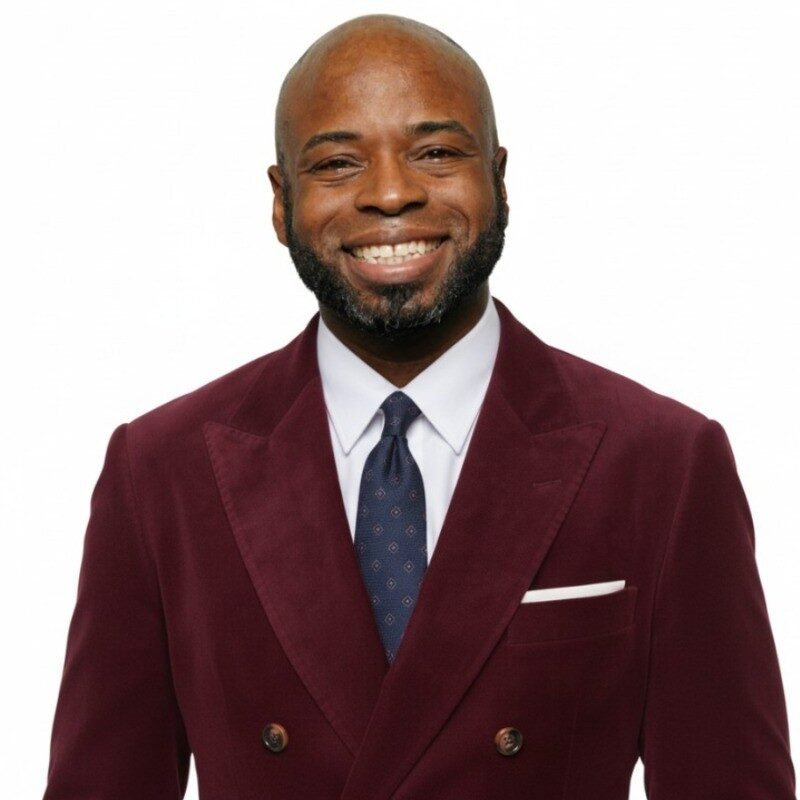
Robert writes Arahkaii’s Living & Travel stories with a focus on meaningful experiences, thoughtful exploration, and the quiet beauty found in everyday life. Blending practical insight with a storyteller’s eye, he highlights destinations, home rituals, and lifestyle perspectives that encourage readers to slow down, savor the moment, and travel with intention.
With a background in creative writing and cultural research, Robert gravitates toward narratives that reveal the heart of a place—its people, textures, and small details often overlooked. Whether he’s documenting hidden-city corners or reflecting on simple living, his work brings a sense of warmth and grounded curiosity. Outside of writing, he enjoys photography, morning walks, and discovering local cafés wherever he goes.