
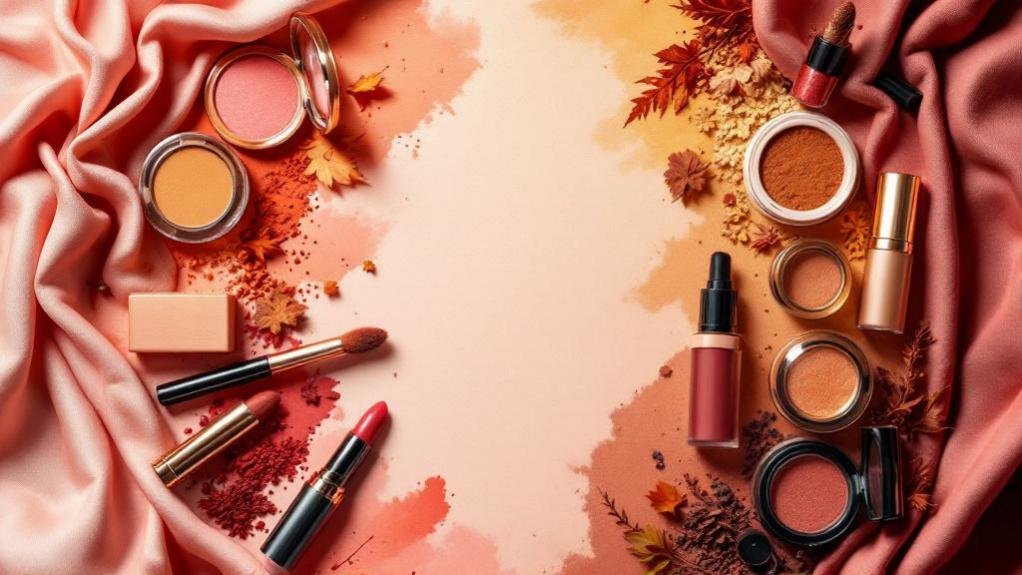
There’s a particular discomfort that arrives in early November, usually while standing in bathroom light that’s turned unforgiving. The lavender eyeshadow that looked ethereal in July now reads vaguely bruised. The coral lipstick that screamed summer vitality has gone strangely flat. The carefully curated face that worked perfectly for three months suddenly doesn’t work at all.
This isn’t imagined. It’s physiology meeting environment, and it happens to nearly everyone who wears makeup as the seasons turn.
“The light changes first,” explains celebrity makeup artist Daniel Martin, whose client roster includes Meghan Markle and Jessica Alba. “Summer light is blue-toned, harsh, coming from directly overhead. Autumn light is golden, diffused, coming from lower angles. The exact same makeup reads completely differently in these two lighting conditions—what looked fresh in summer brightness can look washed out or jarring in autumn’s warm glow.”
The solution isn’t buying an entirely new makeup collection every season. It’s understanding why certain colors stop working and learning to transition strategically between palettes that honor both your skin’s undertones and the environmental shifts happening around you. The goal isn’t following rigid seasonal rules—it’s maintaining the coherence between your face, your wardrobe, and the natural world that keeps you from feeling like you’re fighting against yourself.
The Undertone Question Nobody Actually Answers
Most beauty advice starts with undertones: cool or warm, silver or gold, summer or autumn. The wrist-vein test appears in every makeup guide ever written—blue veins supposedly indicate cool undertones while green veins signal warm. Jewelry preference follows—silver flatters cool, gold enhances warm.
These tests work, technically. They identify undertone. What they don’t explain is why undertone matters for seasonal transitions or what to do when you’re neutral-toned and both silver and gold look fine.
“Undertone determines which specific shades within a color family will harmonize with your skin,” says makeup artist Katie Jane Hughes, known for her radiant, glowy aesthetic and 1.2 million Instagram followers. “But seasonal transitions aren’t really about undertone—they’re about temperature. Cool-toned people don’t suddenly become warm-toned in autumn. They just shift from cooler versions of colors to slightly warmer versions within their undertone family.”
The distinction matters because it prevents the common mistake of abandoning your entire makeup collection when seasons change. A cool-toned person doesn’t need to force warm terracotta eyeshadow if it makes them look jaundiced. They need cooler-toned burnt sienna—still autumnal, still warm compared to summer pastels, but calibrated to their specific skin chemistry.
True warm undertones—the green-veined, gold-jewelry-loving, never-looks-sallow-in-yellow category—have the easiest autumn transition. The season’s signature colors (rust, mustard, deep olive, brick red, burnt orange) are designed for warm skin. These shades contain yellow or golden bases that mirror the warmth already present in the skin, creating seamless coherence.
Cool undertones require more careful editing. Instead of pure warm shades, look for colors with blue or purple bases that still read as autumnal. Pat McGrath Labs’ Mothership VIII: Divine Rose II palette offers the perfect example: warm-appearing shades like “Xtreme Mahogany” and “Ritualistic Rose” contain enough cool-toned complexity that they work on cool skin without the muddy effect true terracotta creates. Plum browns instead of orange browns. Berry burgundies instead of pure rust. Cooled-down versions of autumn’s warmth.
Neutral undertones—those whose veins appear blue-green and who can wear both silver and gold—have the most flexibility but also the most decision paralysis. For neutral skin, the seasonal transition is more about saturation and depth than strict temperature. Charlotte Tilbury’s Pillow Talk collection demonstrates this perfectly: rosy-browns that read neither strictly cool nor warm, allowing neutral undertones to shift from the lighter “Pillow Talk” shade in summer to the deeper “Pillow Talk Intense” in autumn without changing color families entirely.
The Colors That Actually Work
Walk into Sephora in November and every display screams the same message: autumn means burnt orange, terracotta, and warm bronze. This oversimplification creates more confusion than clarity.
Autumn’s color story is more nuanced than “everything warm.” The season encompasses early autumn’s golden yellows and olive greens, mid-autumn’s rusts and burnt oranges, and late autumn’s deep burgundies and chocolate browns. Successful transitions don’t mean immediately jumping to the deepest, warmest shades—they mean gradually warming your palette as the season progresses.
For eyes, the bridge color is brown. Not exciting, but functionally essential. “Brown is the great neutralizer,” says Hughes. “It’s the only color that looks good on literally everyone and works with both cool and warm color schemes. When you’re transitioning between seasons, brown becomes your base note that makes everything else harmonious.”
Natasha Denona’s Bronze Palette (the 15-pan version, not the smaller iterations) offers the most comprehensive range of browns for transitional dressing: cool-toned taupes for those with pink undertones, neutral browns that work universally, and warm amber-browns for golden skin. Layer the cooler browns in early autumn, gradually incorporating warmer shades as November arrives.
The eyeshadow transition strategy that actually works involves starting with your existing summer shades and adding autumn tones gradually rather than swapping entire palettes overnight. Say you’ve been wearing MAC Chill eyeshadow (cool-toned mauve) all summer. Don’t abandon it—add MAC Soft Brown in the crease, then place Chill on the lid. The brown warms up the cool mauve without erasing it entirely. By mid-autumn, flip the proportions: brown on the lid, just a hint of mauve in the inner corner. By late autumn, the mauve is gone entirely, replaced by something richer like MAC Cranberry or Huda Beauty’s “Bordeaux” from the New Nude Palette.
This gradual layering prevents the jarring “I look like a completely different person” effect that happens when you switch from pastel purple to burnt orange in a single day. You’re training your eye—and everyone else’s—to accept the warmer palette incrementally.
For lips, the shift is more dramatic but also more satisfying. Summer’s bright pinks and corals (think MAC Vegas Volt or Fenty Beauty’s Flamingo Acid) have no autumn equivalent that maintains the same energy level. Autumn lips are deeper, richer, more saturated. The exact shade depends on your skin tone, but the formula matters as much as the color.
Deep skin tones carry the richest autumn shades beautifully: Pat McGrath’s MatteTrance Lipstick in “Omi” (deep burgundy) or Fenty Beauty’s “Clapback” (rich chocolate brown). These shades look muddy on pale skin but stunning on deeper tones because they have enough contrast to register as intentional color rather than accidental darkness.
Medium skin tones—the largest and most diverse category—have the widest range. Charlotte Tilbury’s “Pillow Talk Intense,” MAC’s “Taupe,” Lisa Eldridge’s “Velvet Ribbon” (a true brick red), or Bobbi Brown’s “Burnt Red” all work depending on whether you skew cool or warm. The key is avoiding shades so light they disappear or so dark they overwhelm.
Light skin tones need enough pigmentation to register as autumn rather than nude. NARS “Morocco” (warm terracotta), Lisa Eldridge “Skyscraper Rose” (muted rose-brown), or Gucci Beauty’s “Margaret Ruby” (warm burgundy) provide autumn warmth without requiring fairy-tale-villain-level confidence to wear. These shades have enough brown or rust in them to read as earthy rather than bright, but enough red or pink to maintain relatability.
The texture shift matters too. Summer’s glossy, wet-looking lips (the Rhode Peptide Lip Tint look that dominated July) feel incongruous with autumn’s matte knits and structured wool coats. Autumn lips are more likely to be velvet-matte or satin, with formulas that look polished rather than dewy. Pat McGrath’s MatteTrance range, Lisa Eldridge’s True Velvet formulas, and Charlotte Tilbury’s Matte Revolution lipsticks all deliver this sophisticated, velvety finish that reads as intentionally elegant rather than accidentally flat.
Blush and bronzer present the trickiest transition because they’re applied to the largest surface area. A slightly wrong eyeshadow or lipstick might pass unnoticed, but blush or bronzer in the wrong tone makes your entire face look off.
Summer blush tends toward bright pinks and peaches with cool or neutral bases—shades like NARS Orgasm (the beauty industry’s most famous blush, peachy-pink with gold shimmer) or Rare Beauty’s Encourage (bright cool pink). These shades mimic the flush of heat, sun exposure, exertion.
Autumn blush mimics different stimuli: the warmth of a fireplace, the glow after a brisk walk, the natural flush that comes from cold air rather than heat. The shades shift toward terracotta, warm mauve, cinnamon, and soft brick. Tower 28’s BeachPlease in “Golden Hour” (warm terracotta cream blush) works beautifully on warm and neutral skin. Westman Atelier’s Baby Cheeks in “Petal” (soft warm pink with brown undertones) flatters cool and neutral tones. Merit’s Flush Balm in “Persimmon” (true warm orange-red) looks stunning on deep skin that can carry saturated pigment.
The application changes too. Summer blush often sits on the apples of cheeks for that just-ran-a-mile flush. Autumn blush works better applied slightly higher and more swept back toward temples, following the natural contours of the face rather than emphasizing roundness. This creates sophistication rather than girlishness—a shift in energy that matches autumn’s more serious, grounded aesthetic.
Bronzer follows similar logic. Summer bronzers tend toward golden, shimmery formulas that mimic sun exposure—think Charlotte Tilbury’s Filmstar Bronze & Glow or Fenty Beauty’s Sun Stalk’r in “Shady Biz” (warm bronze with golden shimmer). Autumn bronzers are deeper, more muted, occasionally matte. They sculpt rather than illuminate, adding warmth through depth rather than sparkle.
Tom Ford’s Shade & Illuminate in the deeper shades, Chanel’s Les Beiges Healthy Glow Bronzing Cream in “390” or “391,” or Hourglass’s Ambient Lighting Bronzer in “Luminous Bronze Light” all provide the sophisticated, matte-to-satin warmth that defines autumn faces. These bronzers create the impression of naturally tanned skin rather than obviously applied bronze, which is the entire goal—looking like yourself, just warmer.
The Formula Question Nobody Mentions
Color gets all the attention in seasonal makeup transitions, but formula determines whether those colors actually work. The same shade in powder versus cream, matte versus shimmer, sheer versus pigmented can read completely differently depending on skin texture, climate, and how your skin behaves in various weather conditions.
Summer formulas tend toward lightweight, breathable, occasionally sheer. High heat and humidity demand makeup that won’t slide, melt, or settle into every fine line by noon. Powder eyeshadows, setting powders, matte foundations, and long-wear formulas dominate. The goal is survival as much as beauty.
Autumn removes that constraint. Cooler temperatures and lower humidity mean your face isn’t fighting your makeup. This opens space for richer, more emollient formulas that would be unwearable in July: cream eyeshadows, dewy foundations, balm-to-powder blushes, non-setting formulas that maintain slight movement throughout the day.
“Autumn is when cream products really shine,” says makeup artist Mary Phillips, whose work with Kendall Jenner and Hailey Bieber defines modern glamour. “Your skin isn’t producing as much oil because it’s cooler, so cream products sit on the skin beautifully instead of sliding around. They also photograph better in the softer autumn light—you get this luminous, dimensional look that’s harder to achieve with powder.”
This is why the Tom Ford cream eyeshadows (Cream Color for Eyes collection) or Chanel’s Ombre Première Longwear Cream Eyeshadows work better in autumn than summer despite being available year-round. Applied with fingers and sheered out across the lid, shades like Tom Ford’s “Platinum” (cool taupe with pearl) or “Burnished Copper” (warm bronze) create the sophisticated, lived-in eye that defines autumn elegance. These formulas would feel too heavy and crease-prone in summer heat but perform beautifully once temperatures drop.
The same logic applies to base makeup. Summer often demands matte or transfer-proof foundations that lock in place. Autumn allows for the beautiful, skin-like finish of formulas like Charlotte Tilbury Beautiful Skin Foundation, Chanel Les Beiges Healthy Glow Foundation, or Westman Atelier Vital Skin Foundation—all dewy, buildable, and designed to look like perfected skin rather than applied makeup.
What Actually Happens When You Transition
The practical reality of seasonal makeup transitions involves more trial and error than beauty editorials typically admit. You’ll buy shades that look perfect in-store but wrong in your bathroom. You’ll overdo the warmth and look jaundiced for a day. You’ll under-do it and look washed out. This is normal and fixable.
The most reliable transition strategy involves picking one focal point to warm up first while keeping everything else relatively neutral. If you’re shifting your eyes toward warm browns and terracotta, keep your lips more neutral (a warm nude or muted mauve) until your eyes feel natural. Then warm up the lips while potentially pulling back on eye intensity. Finally, adjust blush and bronzer to create overall harmony.
This sequential approach prevents sensory overload—both for you and anyone looking at you. Changing everything simultaneously creates dissonance. Changing one element at a time while keeping the rest familiar maintains coherence even as the overall palette warms.
The other reality is that seasonal transitions don’t require buying everything new. The beauty industry wants you to believe each season demands a complete collection refresh, but strategic editing combined with a few key additions works better than wholesale replacement.
Keep your best neutral browns, taupes, and universal shades regardless of season. These form your baseline. Add 3-5 new items specifically for autumn: one warm eyeshadow palette or a few singles in terracotta/rust/olive, one warm lipstick, one warm blush, possibly one deeper bronzer if your summer version reads too light. These additions shift your entire aesthetic without requiring hundreds of dollars in new makeup.
The final piece involves recognizing that seasonal makeup transitions are optional. If you’ve found colors that make you feel confident and powerful, those colors don’t suddenly become wrong because the calendar changed. Fashion rules exist to be broken, and seasonal guidelines are suggestions rather than mandates.
But for those who do feel that November dissonance—the sense that your summer face no longer fits—the solution is neither complicated nor expensive. It’s understanding that color exists in relationship to skin, light, and environment, and adjusting those relationships as the world around you changes. Your face remains the same. The light changes. Your makeup adapts. And suddenly, you look like yourself again.
PRODUCTS MENTIONED:
Eyes:
- Pat McGrath Labs Mothership VIII: Divine Rose II Palette
- Charlotte Tilbury Pillow Talk Collection
- Natasha Denona Bronze Palette (15-pan)
- MAC Soft Brown, Cranberry eyeshadows
- Huda Beauty New Nude Palette
- Tom Ford Cream Color for Eyes (Platinum, Burnished Copper)
- Chanel Ombre Première Longwear Cream Eyeshadows
Lips:
- MAC Vegas Volt, Taupe lipsticks
- Fenty Beauty Flamingo Acid, Clapback
- Pat McGrath MatteTrance in Omi
- Charlotte Tilbury Pillow Talk Intense, Matte Revolution
- Lisa Eldridge Velvet Ribbon, Skyscraper Rose, True Velvet formulas
- Bobbi Brown Burnt Red
- NARS Morocco
- Gucci Beauty Margaret Ruby
Blush:
- NARS Orgasm
- Rare Beauty Encourage
- Tower 28 BeachPlease in Golden Hour
- Westman Atelier Baby Cheeks in Petal
- Merit Flush Balm in Persimmon
Bronzer:
- Charlotte Tilbury Filmstar Bronze & Glow
- Fenty Beauty Sun Stalk’r in Shady Biz
- Tom Ford Shade & Illuminate
- Chanel Les Beiges Healthy Glow Bronzing Cream (390, 391)
- Hourglass Ambient Lighting Bronzer in Luminous Bronze Light
Base:
- Charlotte Tilbury Beautiful Skin Foundation
- Chanel Les Beiges Healthy Glow Foundation
- Westman Atelier Vital Skin Foundation

Lina, Founder, Creative Director & Editor-in-Chief
The mind behind Arahkaii. Lina launched the platform to spotlight the designers and brands she kept discovering and thinking “why isn’t anyone talking about this?” She brings a thoughtful, intentional approach to storytelling. She leads the editorial team with a focus on clarity, creative depth, and modern femininity, shaping narratives that feel both elevated and deeply human.She shapes everything from content strategy to editorial tone, is hands-on with every feature, and believes the best content makes you stop scrolling. Currently juggling platform-building, brand outreach, and defending her slow morning ritual as essential creative practice.

